Best 5.25″ Marine Speakers For Motorcycle, Boat And Jeep 2022
By Robert Jones · 2020-08-25
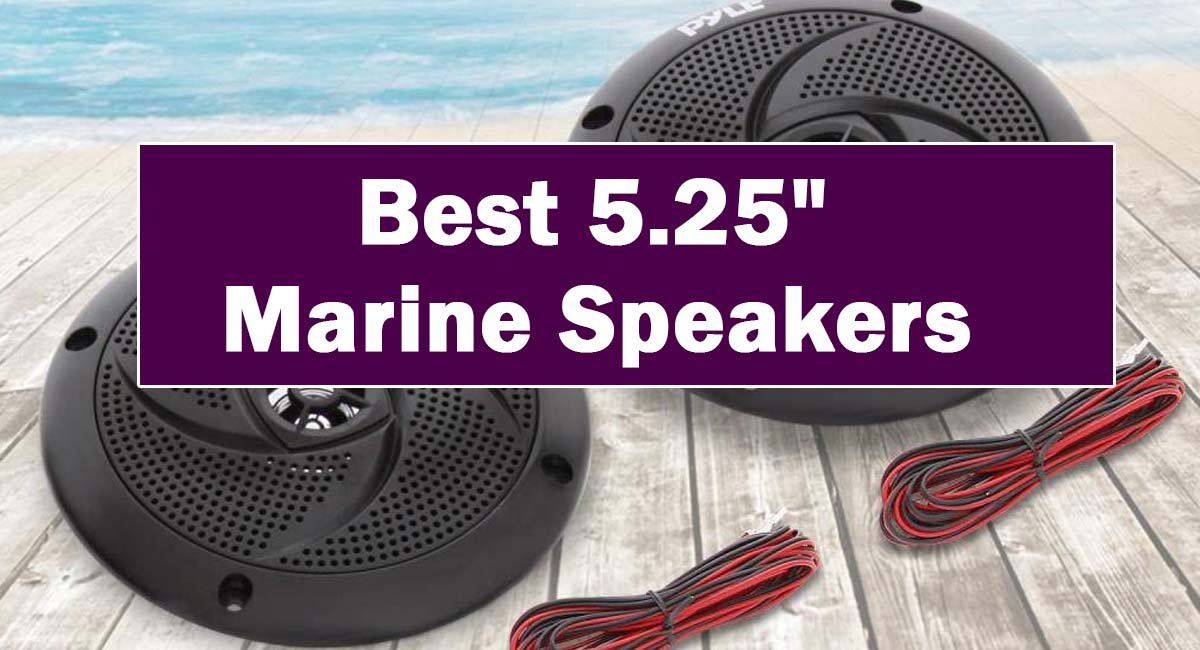
Right then, if you love your tunes out in the elements – be it on a motorbike, boat, or in a Jeep – you need speakers built to withstand the abuse. I've tested countless 5.25-inch marine speakers, and most don't cut it. Here are the ones that actually survive and sound good.
Right then, if you're anything like me, you love your tunes, even when you're out in the elements. Whether it's the roar of a motorbike engine, the splash of a boat, or the rumble of a Jeep bouncing over rough terrain, you want your music to cut through. And that, my friends, is where proper marine speakers come in.  *Best 5.25″ Marine Speakers For Motorcycle, Boat And Jeep 2022 — tested in the SpeakersMag workshop.* I've been mucking about with speakers for more than twenty years now, and the outdoor stuff has always held a special fascination for me. It's not just about durability; it's about creating sound in environments that actively try to destroy delicate electronics. Standard car speakers? Forget it. They'll be toast faster than you can say "salt spray." You need something purpose-built, and for those tighter spaces – like a bike fairing, a small boat console, or tucked away in a Jeep – a 5.25-inch speaker is often just the ticket. They offer a decent balance of size, power, and often, a price tag that won't make your eyes water. **Quick Verdict: For robust sound in the harshest outdoor conditions, the Fusion MS-FR5021 are hard to beat without spending a fortune.** ### Why Marine Speakers Aren't Just 'Waterproof' Now, a common mistake folks make is thinking "marine" just means it can get wet. And yes, waterproofing is a massive part of it, especially if you're on a boat. But it's so much more than that. I've seen countless "water-resistant" speakers fail miserably after a few months because they weren't truly marine-grade. Think about it: * **UV Exposure:** The sun isn't just hot; its UV rays are brutal on plastics and rubber surrounds. Cheaper materials will crack, fade, and perish in no time. * **Salt Corrosion:** If you're near the sea, salt spray is insidious. It gets everywhere and corrodes metal components, connections, and even the speaker terminals themselves. Even fresh water can bring its own challenges with mineral deposits. * **Vibration:** Motorbikes, boats, Jeeps – they all vibrate. A lot. Speakers need sturdy baskets, solid mounting points, and components that won't rattle loose or fall apart after a few hundred bumpy miles or hours at sea. * **Temperature Extremes:** From baking hot summer days to freezing winter nights, these speakers need to cope with huge temperature swings without their materials expanding, contracting, and ultimately failing. So, when I say "marine speaker," I'm talking about something built from the ground up to laugh in the face of Mother Nature. We're looking for UV-resistant cones (often polypropylene or treated cloth), corrosion-resistant grilles (stainless steel, often), properly sealed motor assemblies, and moisture-resistant crossovers. If a speaker doesn't boast about these features, it's likely not up to the job. Don't waste your hard-earned cash. I've had my hands on countless pairs over the years, testing them in my workshop, chucking them into my old Defender, and fitting them for various clients. Some have been absolutely brilliant, delivering years of faithful service. Others? Well, let's just say they ended up in the scrap heap a lot quicker than I'd like to admit. Experience is a harsh teacher, but it teaches you what works. ### My Top Picks for 5.25-inch Marine Speakers Right, enough of the preamble. Let's get down to the actual kit. Here are a few 5.25-inch marine speakers that have genuinely impressed me with their resilience and sound quality in demanding environments. Remember, we're not expecting studio-grade fidelity here; we're after clarity, volume, and outright survival. #### Fusion MS-FR5021 Marine Speakers Fusion is a name that often pops up when you talk marine electronics, and for good reason. They generally make solid kit, and these 5.25-inch speakers are a prime example. I fitted a pair of these into a client's small RIB last summer. It's a little dinghy that gets hammered – salt, sun, the occasional wave washing right over the bow. They've been going strong ever since. The sound? It's decent enough for open-air listening. You're not going to be analysing every nuance of a classical symphony, but that's not what these are for. What they do provide is good clarity and enough volume to cut through engine noise and wind. That's the main thing. The polypropylene cone holds up well to moisture and UV, and the stainless steel grille is properly corrosion-resistant. For the money, around £70-£90 a pair, you'd be hard-pressed to find much better. **Pros:** * Seriously tough build quality – they really are marine-grade. * Excellent weather resistance; I've seen them take a proper beating. * Clear sound, even when there's a lot of background noise. * Pretty straightforward to install, even for a DIYer. **Cons:** * Bass response is a bit light on its own. You might want a small sub if you crave serious thump. * Sound isn't exactly audiophile quality, but that's expected for this type of speaker. **Who it's for:** Boat owners, motorcyclists, and Jeep enthusiasts who need reliable, robust sound without breaking the bank. Great for factory replacements where space is tight. **Who should skip it:** If you're looking for deep, impactful bass without adding a subwoofer, or if you demand absolute pristine sound quality above all else. #### JL Audio M3-525X-S-Gw Marine Coaxial Speakers Now, JL Audio. They're a bit more premium, and these M3-series speakers show why. I've had a set of their larger M6 speakers in my own workshop setup for a while, and the quality is obvious. These 5.25-inch M3s bring a lot of that same pedigree to a smaller package. They're built like tanks, using proper marine-grade materials throughout. The grilles are UV-treated, and the injection-moulded mica-filled polypropylene cones are incredibly durable. What really sets them apart, though, is the sound. For a 5.25-inch coaxial, they manage to deliver a surprisingly balanced sound with a fair bit more mid-bass than the Fusions. The silk dome tweeter is a nice touch, giving a smoother, less harsh top end, which can be a real blessing when you're listening at high volumes outdoors. They come with white sport grilles, which look sharp, but you can usually get them in charcoal if you prefer. They're not cheap, typically retailing for £180-£220 a pair, but you are getting a noticeable step up in audio performance and refinement. If you've got the budget, these are a serious contender. **Pros:** * Superior sound quality for a 5.25-inch marine speaker, especially the mid-range and highs. * Excellent bass response for their size; you might not even need a sub for some tastes. * Top-tier marine durability and UV resistance – truly built to last. * Stylish design with multiple grille options. **Cons:** * Significantly more expensive than entry-level options. * Might be overkill if your primary concern is just "loud enough" rather than "good sounding." **Who it's for:** Those with a bit more budget who prioritise sound quality alongside rugged durability. Perfect for higher-end motorcycle fairings, sport boats, or custom Jeep builds. **Who should skip it:** If your budget is tight, or if you're replacing speakers in a very noisy environment where subtle sound improvements would be lost anyway. #### Kicker KMFCD50 5.25-inch Marine Coaxial Speakers Kicker is another brand that knows a thing or two about making things loud and durable, and their marine line is no exception. These KMFCD50s are a solid mid-range option. I installed a pair of these in a friend's jetski for a laugh – it was a tight squeeze, but they eventually went in. They've been thrashed, submerged, and generally abused, and they still pump out the tunes. They use a polypropylene cone with UV treatments, and the tweeter is a co-axial design. The sound is punchy, as you'd expect from Kicker. It's geared towards getting heard over engine noise and wind, so don't expect a delicate presentation. They're loud, clear, and can handle a fair bit of power. The bass is decent for a 5.25-inch, providing a good kick. At around £100-£130 a pair, they sit comfortably between the Fusion and the JL Audio in terms of price and performance. They offer good value for money if you want that Kicker 'oomph' in a marine package. **Pros:** * Punchy, dynamic sound that gets heard in noisy environments. * Robust Kicker build quality, designed for abuse. * Good power handling, so they can get properly loud. * Decent value for the performance offered. **Cons:** * Can be a little bright or aggressive for some listeners, especially at higher volumes. * Not quite as refined as the JL Audio, but then, they're not trying to be. **Who it's for:** People who love their music loud and clear, often in high-noise environments like ATVs, jetskis, or motorcycles. Good for those wanting a step up from entry-level without the premium price of JL Audio. **Who should skip it:** If you prefer a more laid-back, neutral sound, or if your listening environment is relatively quiet where their aggressive nature might be tiring. ### Comparison Table: 5.25-inch Marine Speakers Let's put them side-by-side so you can see the differences at a glance. Prices are approximate, mind, and can vary wildly depending on where you buy them from. | Feature | Fusion MS-FR5021 | JL Audio M3-525X-S-Gw | Kicker KMFCD50 | | :---------------- | :-------------------- | :------------------------ | :----------------------- | | **Price (Pair)** | £70 - £90 | £180 - £220 | £100 - £130 | | **Power (RMS)** | 50W | 50W | 50W | | **Sensitivity** | 88dB | 89dB | 88dB | | **Cone Material** | Polypropylene | Mica-filled Polypropylene | Polypropylene | | **Tweeter Type** | Aluminium Dome | Silk Dome | Co-axial | | **Durability** | Excellent (Marine-Grade) | Exceptional (Marine-Grade) | Very Good (Marine-Grade) | | **Sound Profile** | Clear, balanced, light bass | Balanced, detailed, good mid-bass | Punchy, dynamic, forward | | **Best For** | Value, basic marine | Premium sound, refined | Loud, energetic sound | ### What To Look For When Buying 5.25-inch Marine Speakers Alright, so you've seen a few of my recommendations, but how do you pick for yourself? Here's a quick checklist of what I always consider when someone asks me about outdoor speakers: * **True Marine-Grade Certification:** Look for phrases like "ASTM B117 salt fog certified" or "ASTM D4329 UV certified." This means they've actually been tested against the elements, not just given a splash of waterproof coating. * **Materials, Materials, Materials:** * **Cones:** Polypropylene or mica-filled polypropylene are excellent for resisting moisture and UV. * **Surrounds:** Santoprene or rubber are far superior to foam for outdoor use. * **Grilles/Hardware:** Stainless steel or marine-grade polymer are a must for preventing corrosion. * **Speaker Basket:** Often plastic composite or a coated metal to resist rust. * **Power Handling (RMS):** Don't just look at peak power. RMS (Root Mean Square) is the continuous power a speaker can handle. Match this with your amplifier's output. For outdoor use, you generally want more power to cut through noise. * **Sensitivity:** This tells you how efficiently the speaker converts power into sound. Higher sensitivity (e.g., 90dB+) means it will get louder with less power, which is brilliant for direct head unit power or small amps. * **Mounting Depth:** Critical for 5.25-inch speakers, especially in bike fairings or tight boat consoles. Measure your available space before buying! You don't want to buy a pair only to find they stick out like a sore thumb or simply won't fit. * **Sound Profile:** As I mentioned, you're not always after pristine audio. Think about your environment. Do you need something loud and punchy (Kicker) or something a bit more balanced (JL Audio)? For open-air, a slightly brighter sound can actually help cut through wind noise. * **Drainage:** Some speakers are designed with drainage channels to prevent water from pooling inside the speaker structure. A small detail, but it makes a difference to longevity. ### Installation Tips (From Someone Who's Done it Hundreds of Times) Even the best marine speakers won't sound good or last long if they're poorly installed. Here are a few bits of advice: 1. **Seal Everything:** When mounting, use a good quality marine-grade sealant around the speaker flange to prevent water ingress into your mounting surface. Don't skip this step! 2. **Proper Wiring:** Use marine-grade tinned copper wire. It resists corrosion much better than standard copper. Crimp and seal all connections with heat-shrink tubing. 3. **Fuse It Right:** Always install an appropriate fuse close to your power source for any amplifier or head unit. It's a basic safety measure that too many people overlook. 4. **Consider an Amp:** While some marine speakers can run off a head unit, an external marine-grade amplifier will almost always give you better volume and clarity, especially when you're battling wind and engine noise. Even a small 2-channel amp can make a huge difference. 5. **Placement Matters:** Try to aim speakers towards your listening position if possible. In boats, this might mean angling them slightly. On motorbikes, it's often fixed, but for Jeeps, you might have more flexibility. 6. **Drill Pilot Holes:** Never just screw straight into fiberglass or plastic. Drill small pilot holes first to prevent cracking and ensure a secure, flush fit. ### FAQs About 5.25-inch Marine Speakers Got a few nagging questions? I hear them all the time, so let's clear some of them up. #### Can I use car speakers instead of marine speakers if they're cheaper? Honestly, give this one a miss unless you're really skint and don't mind replacing them every few months. Car speakers aren't built for the relentless assault of UV, salt, and constant moisture. Their materials will degrade quickly, leading to distortion and complete failure. You'll spend more in the long run replacing them than if you'd just bought proper marine speakers in the first place. #### Do marine speakers need an amplifier? Not strictly, no. Many marine head units can power them adequately, especially the Fusion or Kicker options I mentioned for casual listening. However, an external marine amplifier will significantly boost volume, improve clarity, and allow the speakers to perform at their best, cutting through background noise much more effectively. If you want serious volume and dynamic range outdoors, an amp is a very worthwhile upgrade. #### How do I clean my marine speakers? Keep it simple. A mild soap solution and fresh water with a soft cloth are usually all you need. Avoid harsh chemicals, abrasive cleaners, or high-pressure washers, as these can damage the cone, grille finish, or seals. Rinse thoroughly with fresh water to remove any soap residue, especially if you've been in saltwater. #### What's the difference between coaxial and component marine speakers? Coaxial speakers (like all the ones I've discussed here) have the tweeter mounted in the centre of the main woofer cone. They're easier to install as it's a single unit. Component speakers have separate woofers, tweeters, and usually an external crossover. Component sets generally offer better sound quality and imaging because you can place the tweeter optimally, but they're more complex to install and take up more space. For 5.25-inch sizes and the environments we're talking about, coaxial is usually the more practical choice. ### Final Word Choosing the right 5.25-inch marine speaker for your motorcycle, boat, or Jeep really boils down to balancing your budget, your sound expectations, and the sheer brutality of the environment it's going into. For me, the Fusions are a rock-solid, affordable workhorse. If you can stretch your budget, the JL Audios deliver a far more refined and balanced sound, while the Kickers will give you that punchy, energetic performance many folks crave. No matter which you choose, remember that proper installation with marine-grade components and sealing is half the battle. Invest a bit of time and care, and your chosen speakers will happily belt out your favourite tunes for years, no matter how wild your adventures get. Happy listening, and try not to get *too* wet!