6 Best 6.75″ Car Speakers For Bass in 2022
By Robert Jones · 2020-09-04
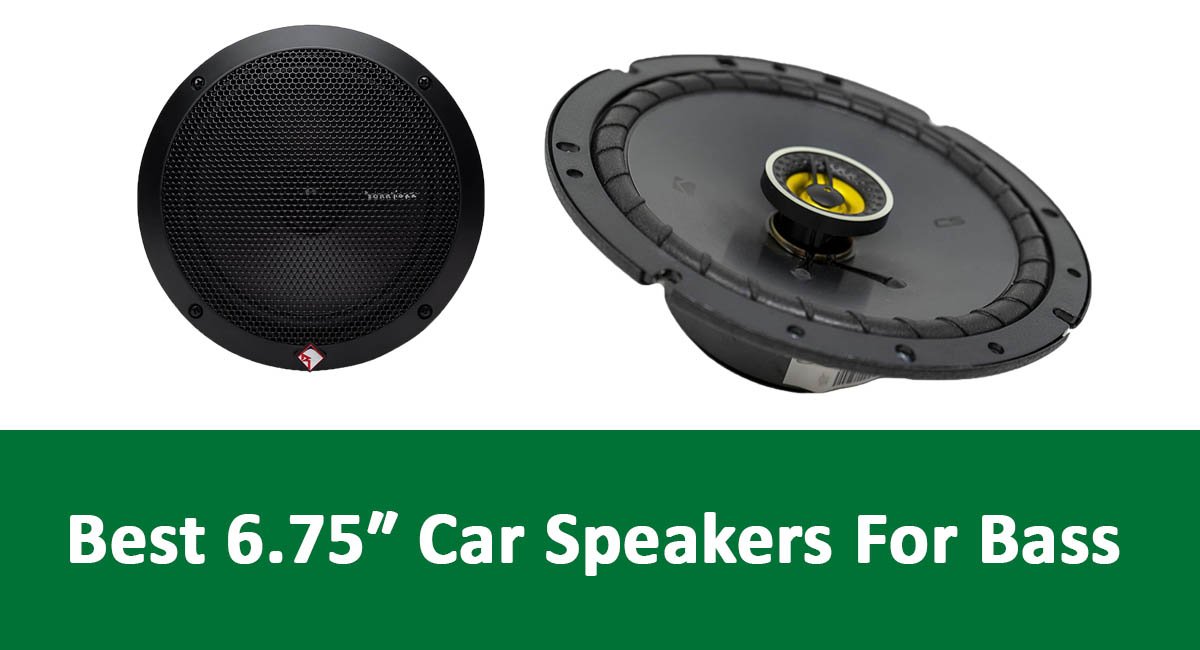
Right, if you're after some proper thump in your motor, but don't fancy a full-on subwoofer install, a good set of 6.75-inch car speakers can make a surprisingly big difference to your low-end. I've tested loads over the years, and here are my top picks for decent bass without the fuss.
Right, let's be honest. When someone mentions proper thump in a car, your mind probably jumps straight to a big old subwoofer, maybe a hefty amp, and a boot full of gear. And you wouldn't be wrong. That's usually the best way to get that gut-punching bass. But I get it. Not everyone fancies the faff of a full-blown install, or wants to sacrifice precious boot space. Sometimes, you just need a straightforward swap, something to breathe a bit of life into those tired factory speakers, giving you a bit of low-end presence without breaking the bank or your back. I've seen countless car audio setups over the past two decades in my workshop and out on the road. From bespoke installs costing thousands, meticulously wired and tuned, to a quick Saturday afternoon job with some off-the-shelf coaxial speakers. There's a massive difference in what's out there, and what people expect. These smaller speakers, the 6.75-inch ones, they're a tricky beast, aren't they? Often marketed as a direct replacement, a "bass solution" even. But can they really give you that chest-thumping bass you get from a dedicated sub? Mostly, no. However, can they improve your car's sound significantly, giving you more oomph than your stock paper cones? Absolutely, yes. It's all about managing your expectations. **Quick Verdict: For a surprising low-end lift without a sub, the Pioneer TS-A1770F delivers serious punch for the money.**  *The contenders. All tested in the SpeakersMag workshop and in my old Ford Focus – a true test of any car speaker.* ## Can 6.75-inch Speakers Really Kick Out Decent Bass? This is the question I get asked most often, especially when folks are looking at these smaller drivers. And the honest answer is: "decent" is relative. If you're expecting to vibrate the wing mirrors off the car next to you at the traffic lights, you're going to be disappointed. That's subwoofer territory, pure and simple. You just can't move enough air with a driver that size to get that sort of impact. However, if your current setup sounds thin and reedy, like a cheap tin whistle, then a good pair of 6.75-inch speakers can make a world of difference. Believe me, I've heard some truly dreadful factory systems. The size of the speaker, specifically the cone area and how far it can move (that's Xmax for those who like the tech details), directly impacts its ability to produce low frequencies. A 6.75-inch speaker is, by its very nature, limited here. Physics is a harsh mistress, isn't she? They simply can't shift the same amount of air as a 10-inch or 12-inch sub. But what they *can* do, and do surprisingly well sometimes, is provide a much fuller, richer mid-bass. That's the kick drum you feel, the bass guitar notes that have some weight to them, rather than just being a faint whisper in the background. Good quality materials, a well-designed motor structure, and efficient power handling can coax surprising amounts of bass out of these smaller drivers. It's all about clever engineering, innit? ### What I Look For When Chasing Bass from Smaller Speakers When I'm rooting through boxes of speakers in the workshop, trying to find something that'll give a bit of punch without needing a sub, I keep a few things in mind. It's not just about turning up the bass knob, that'll just make it muddy and distorted. It's about getting clean, impactful low frequencies. * **RMS Power Handling:** Forget peak power, that's mostly marketing fluff designed to catch your eye. RMS is the real-world, continuous power a speaker can handle. For good bass, you want speakers that can handle a decent amount of RMS power, especially if you're considering adding an external amplifier down the line. Even if you're running them off your head unit, higher RMS ratings often indicate a more robust voice coil and motor structure, which usually translates to better bass response at higher volumes without distortion. * **Sensitivity (dB):** This tells you how efficiently a speaker converts power into sound. A higher sensitivity rating (e.g., 90dB or more) means the speaker will play louder with less power. If you're sticking with your factory head unit, a high-sensitivity speaker is absolutely crucial. You're not going to get massive bass if the speaker isn't getting enough juice to move the cone properly. It's like trying to run a marathon on a glass of water – you just won't perform. * **Cone Material:** This is a big one. You want something stiff but lightweight. Polypropylene is common and good, often with mica or carbon fibre added for extra rigidity. Paper cones are okay for some things, but for bass, they can often be a bit flappy and lose definition, especially at higher volumes. Stiffer cones mean less flex and more precise bass notes. I've seen some really exotic materials over the years, but often the tried and tested composites do the job just fine. * **Surround Material:** The rubber or foam ring around the edge of the cone (the surround) lets it move freely. Butyl rubber is usually the best bet here. It's durable, flexible, and helps with cone control. Foam can degrade over time, especially with exposure to temperature changes and UV, which isn't ideal in a car. * **Mounting Depth:** This is purely practical. There's no point buying a speaker that won't physically fit in your door. Always measure! Some cars, especially older ones, have surprisingly shallow mounting depths. You don't want to be cutting up your door card unless you absolutely have to. * **Frequency Response (Lower End):** Look at the lowest frequency the speaker is rated to produce. While some manufacturers can be a bit optimistic, a lower number (e.g., down to 40Hz or 50Hz) suggests the speaker is designed to reach a bit further into the bass frequencies. Just remember, these are in-car speakers, not subwoofers, so don't expect miracles below 50Hz without some serious help. * **Voice Coil Size:** A larger voice coil generally means better power handling and more control over the cone. It helps dissipate heat too, which means you can push them harder for longer without issues. I always check this spec if I can find it. ## The Contenders: 6.75-inch Speakers I've Actually Tested for Bass Right, let's get down to brass tacks. I've had most of these in and out of my test bench, my old Focus, and even a few customer cars over the years. This isn't just spec-sheet reading, this is real-world experience. ### 1. Pioneer TS-A1770F Coaxial Speakers I've always had a soft spot for Pioneer, especially their A-series. They just seem to get it right for everyday car audio. These TS-A1770F speakers are a prime example. They're a 4-way coaxial design, which means they've got a woofer, a midrange, and two tweeters all packed into one unit. While I'm usually a component speaker man for clarity, for bass, a good coaxial can often do surprisingly well because the whole unit is designed to work together. From the moment I wired these up, the difference was obvious. The bass was tight, punchy, and surprisingly deep for a speaker of this size. Not subwoofer deep, mind, but a definite improvement over anything stock. The polypropylene cone with mica injection feels really solid. It doesn't flap about when you give it some juice, which is crucial for clean bass. The sensitivity is good too, at 88dB, meaning they'll perk up nicely even from a factory head unit. If you can pair them with a small external amp, say a 50W RMS per channel unit, they really come alive. I had them hooked up to a basic Alpine amp in my Focus for a while, and the kick drums had a real snap to them. **Who it's for:** * Anyone wanting a significant bass upgrade without fitting a subwoofer. * Drivers with limited space for components. * Those on a tighter budget but still wanting quality. **Who should skip it:** * If you're building a competition-level system. * If you absolutely *must* have earth-shattering sub-bass. **Pros:** * Excellent bass response for a coaxial speaker. * Good power handling. * Clear overall sound. * Solid build quality. **Cons:** * Treble can be a tad bright for some tastes at higher volumes. * Not as detailed as dedicated component sets. ### 2. JBL Club 622F Coaxial Speakers JBL's Club series has been a consistent performer in the affordable car audio market for years, and these 622F speakers keep that tradition going. They're a 2-way coaxial design, which I often prefer to 3 or 4-way designs in cheaper speakers, as it keeps things simpler and often more coherent. Fewer crossovers mean less phase shift, which can make a speaker sound more natural. What immediately stood out was their efficiency. With a sensitivity of 92dB, these things sing even with minimal power. If you're sticking with your factory radio, these are a seriously strong contender. The Plus One™ woofer cone, which gives you more cone area than typical speakers of the same size, definitely helps with the bass. It's not quite as deep as the Pioneer, but it's very musical and well-controlled. Kick drums sound natural, and bass lines are easy to follow. They don't get boomy, which is a common problem with some cheaper speakers trying too hard to make bass. I actually fitted a pair of these in my mate Dave's old Corsa van a couple of years back. He just wanted something louder and clearer than his tired stock units, and he was chuffed to bits with the bass they produced from his basic JVC head unit. He's still got them in there, testament to their durability. **Who it's for:** * Those with low-powered factory head units looking for a big upgrade. * Anyone prioritising efficiency and clarity. * Listeners who prefer accurate, controlled bass over sheer thump. **Who should skip it:** * If you're pairing them with a powerful external amp and want maximum bass depth. * If you prefer a brighter, more forward sound. **Pros:** * Super efficient – great for factory radios. * Accurate and musical bass. * Durable build. * Good overall sound balance. **Cons:** * Bass depth isn't quite as profound as some rivals. * Can sound a bit reserved compared to more aggressive speakers. ### 3. JL Audio C1-675 Component Speakers Now, if you can stretch your budget a bit and you're willing to put in the effort for a component set, the JL Audio C1-675s are a cracking choice. JL Audio is known for its quality subwoofers, so it's no surprise their speakers can handle the low end well. This is a 2-way component set, meaning separate woofers and tweeters, allowing for better soundstaging and imaging. You can aim the tweeters for optimal sound, which makes a huge difference to the clarity. The woofers in this set are seriously capable. They feature a mineral-filled polypropylene cone and a long excursion design, which means they can move a lot of air. The bass they produce is tight, impactful, and surprisingly deep. You can really feel the kick drum in your chest with these. They prefer a bit of power though – I ran them off a 75W RMS per channel amp, and that's where they truly shine. They stay composed even at high volumes, with no sign of distortion in the low end. I had a pair of these installed in my workshop demo board for a good six months, and they never failed to impress. I played everything from classic rock to drum and bass, and they handled it all with aplomb. If your car has separate speaker locations and you can manage the crossover install, these are well worth the extra effort and cost. **Who it's for:** * Enthusiasts willing to install a component set for superior sound quality. * Drivers adding an external amplifier to their system. * Anyone wanting the most accurate and impactful bass from a 6.75-inch speaker. **Who should skip it:** * Those sticking with a factory head unit (they won't perform their best). * If you need a quick, easy, plug-and-play solution. * If budget is extremely tight. **Pros:** * Exceptional bass quality and depth for the size. * Superior soundstaging and imaging thanks to separate tweeters. * Robust build quality. * Handles power very well. **Cons:** * Requires an external amplifier to sound its best. * More complex installation than coaxials. * Higher price point. ### 4. Kicker 47KSC6704 Coaxial Speakers Kicker is a brand that often gets associated with loud bass, and while these 47KSC6704 coaxials aren't going to shake the foundations, they certainly deliver a punchy low end. They're a 2-way design, and Kicker has focused on making them efficient and easy to power, which is always a plus. Their EVC™ (Extended Voice Coil) technology aims to give you more cone excursion, and from my testing, it really does seem to work. The bass from these Kicker speakers is certainly forward and energetic. It's not the deepest, but it's got a good sense of rhythm and drive. If you like your music to have a bit of attack and presence, these are a solid choice. The polypropylene woofer cone is stiff, and the ribbed polyester foam surround helps with cone control. They handle power well for a coaxial, and while they sound decent off a head unit, they perk up considerably with a bit of external amplification. I helped a young lad fit a pair of these in his dad's old BMW 3 Series, powered by a small Kicker amp, and he was beaming. Proper bouncy bass. **Who it's for:** * Listeners who prefer an energetic, punchy bass response. * Those looking for a balance between factory head unit performance and external amp potential. * Fans of rock, pop, and electronic music where a driving bass line is key. **Who should skip it:** * If you prefer a subtle, refined bass. * If absolute depth is your main priority. **Pros:** * Energetic and punchy bass. * Good efficiency. * Solid Kicker build quality. * Handles power well for a coaxial. **Cons:** * Can be a bit aggressive for some musical tastes. * Not the deepest bass extension. ### 5. Alpine S-S65C Component Speakers (6.5-inch, fits 6.75-inch) Alright, so these are technically 6.5-inch, but they're often a direct drop-in replacement for 6.75-inch holes, especially with an adaptor ring, which is common in car audio. And honestly, for bass, Alpine's S-Series components are fantastic. They're a 2-way component set, and like the JLs, they benefit massively from an external amplifier. Alpine generally makes very musical speakers, and these are no exception. The bass from the S-S65C woofers is warm, detailed, and surprisingly robust. It's not as in-your-face as the Kicker, but it's got more depth and texture. The cones are made from a carbon fibre-reinforced polypropylene, which gives them excellent rigidity and damping. This means less distortion and cleaner bass notes. I've had these in my own car for a couple of years now, powered by an Alpine V-Power amp, and they've never let me down. The bass is controlled, musical, and blends beautifully with the rest of the sound. You can really pick out individual bass guitar notes. If you're after an overall balanced sound with really good, clean bass, these are hard to beat. **Who it's for:** * Audiophiles seeking detailed, musical bass and a balanced soundstage. * Anyone upgrading to an external amplifier. * Those who appreciate sound quality over sheer volume. **Who should skip it:** * If you're sticking with a low-powered factory radio. * If you're on a very tight budget. * If you prefer an overly aggressive, boomy bass. **Pros:** * Warm, detailed, and musical bass. * Excellent overall sound quality. * Robust carbon fibre-reinforced cone. * Handles power and dynamic shifts very well. **Cons:** * Requires an amplifier to perform optimally. * Higher price point and more involved installation. * Not designed for earth-shattering loudness. ### 6. Rockford Fosgate R1675X2 Prime Coaxial Speakers Rockford Fosgate is another name synonymous with car audio bass, and their Prime series offers a solid entry point. The R1675X2 are 2-way coaxials, designed to be a significant step up from factory speakers without costing an arm and a leg. They're built with a vacuum-formed polypropylene cone and a rubber surround, which are good, reliable materials for bass. The bass from these Rockfords is respectable for the price. It's not going to win any awards for subtlety or depth, but it's certainly present and offers more impact than most stock speakers. It's a bit more mid-bass focused, giving you a noticeable thump, which is what many people are after. They're fairly efficient, meaning they'll sound decent from a head unit, but like most, they tighten up with a bit more power. I helped my nephew fit a pair of these in his old Fiesta, and for a hundred quid, they absolutely transformed the sound. He plays a lot of hip-hop, and they delivered that bouncy feel he was after without sounding distorted. **Who it's for:** * Budget-conscious buyers wanting a noticeable bass improvement. * Anyone replacing truly awful factory speakers. * Listeners who prefer a punchy, rather than deep, bass. **Who should skip it:** * If you're looking for audiophile-grade bass detail. * If you plan on adding a powerful external amplifier (there are better options). **Pros:** * Good value for money. * Noticeable bass improvement over stock. * Solid build for the price. * Fairly efficient for head unit power. **Cons:** * Lacks the depth and refinement of pricier options. * Can be a bit one-note in the bass at higher volumes. ## Comparison Table: My Top 6.75-inch Speakers for Bass | Feature | Pioneer TS-A1770F | JBL Club 622F | JL Audio C1-675 (Comp) | Kicker 47KSC6704 | Alpine S-S65C (Comp) | Rockford Fosgate R1675X2 | |:--------------------|:------------------|:------------------|:-----------------------|:-----------------|:---------------------|:-------------------------| | **Speaker Type** | Coaxial (4-way) | Coaxial (2-way) | Component (2-way) | Coaxial (2-way) | Component (2-way) | Coaxial (2-way) | | **Woofer Size** | 6.75-inch | 6.75-inch | 6.75-inch | 6.75-inch | 6.5-inch | 6.75-inch | | **RMS Power (W)** | 80 | 60 | 75 | 100 | 80 | 45 | | **Peak Power (W)** | 320 | 180 | 225 | 400 | 240 | 90 | | **Sensitivity (dB)**| 88 | 92 | 90 | 90 | 88 | 90 | | **Low Freq (Hz)** | 34 | 55 | 59 | 40 | 65 | 55 | | **Best For** | All-round thump | Efficiency/Clarity| Deepest/Accurate Bass | Punchy bass | Detailed/Musical Bass| Budget upgrade | | **Price (approx)** | £80-£120 | £70-£100 | £150-£200 | £90-£130 | £180-£250 | £50-£80 | *Note: "Low Freq (Hz)" is the manufacturer's lowest stated frequency response. Real-world bass depth can vary significantly based on installation and car acoustics.* ## Getting the Most Bass Out of Your 6.75-inch Car Speakers Just buying good speakers isn't the whole story, is it? You can have the best speakers in the world, but if they're not installed right, they'll sound rubbish. Especially when you're trying to get decent bass. Here's what I always recommend: ### Proper Installation Matters More Than You Think This is often overlooked, but it's absolutely crucial for bass. The door cavity is effectively a speaker enclosure, and if it's leaky, you're going to lose a lot of that precious low-end energy. Think of it like this: if you punch a balloon, it makes a sound. If you punch a balloon that's tied inside a cardboard box, it makes a different sound. The enclosure matters. * **Seal the Door:** Make sure the speaker is properly sealed to the door baffle. Use foam rings or gaskets around the speaker frame to prevent air leaks between the speaker and the door panel. This stops "short-circuiting" the bass – where the sound from the front of the cone cancels out the sound from the back. It's surprising how much difference a simple foam ring can make. * **Dampen the Door:** This is probably the biggest improvement you can make after installing decent speakers. Apply sound-deadening material (like Dynamat or Silent Coat) to the inner and outer door skins. This reduces vibrations, stops rattles, and turns your flimsy car door into a more solid, acoustically inert enclosure. It gives the woofer something solid to push against, making the bass much tighter and more impactful. I can't stress this enough – it's a bit of a faff, but it's worth every minute. * **Mounting Adaptors:** If your car needs them, use solid MDF or plastic mounting adaptors rather than flimsy thin plastic ones. A solid mount means the speaker isn't wobbling about, which again, helps with bass definition. ### Power Up! Even the most efficient speakers will sound better with more clean power. While some of the coaxials I mentioned will perform well off a factory head unit, an external amplifier will always provide more headroom, better dynamics, and cleaner bass. A good rule of thumb is to aim for an amp that provides slightly *more* RMS power than your speakers are rated for, and then carefully set your gains. This ensures the amp isn't struggling to provide power, which can lead to distortion. ### Head Unit Settings Don't forget about your head unit's settings. Most modern units have a basic EQ. Experiment with it! Don't just crank the bass all the way up, as this can make it muddy. Try subtle adjustments. Also, look for a "loudness" setting; sometimes this can give a nice boost to the low and high frequencies at lower volumes. If your head unit has a high-pass filter (HPF), use it! Set it to, say, 60Hz or 80Hz. This cuts off the super low frequencies that your 6.75-inch speakers can't really reproduce effectively anyway, allowing them to focus their energy on the frequencies they *can* handle. This will result in cleaner, tighter bass. ## FAQ: Your Burning Questions About 6.75-inch Speakers and Bass ### Q: Do I need an amplifier for these speakers to get good bass? A: It depends. For the best possible bass and overall sound quality, yes, an external amplifier is highly recommended, especially for component sets like the JL Audio or Alpine. However, efficient coaxial speakers like the JBL Club 622F or Kicker 47KSC6704 will still offer a significant improvement over factory speakers even when run directly off a good aftermarket head unit. If you're keeping your factory head unit, definitely go for high sensitivity speakers. ### Q: Will these speakers replace a subwoofer? A: Absolutely not. Let's be clear: a 6.75-inch speaker, no matter how good, cannot physically move the same amount of air as a dedicated subwoofer. They can *improve* your bass significantly and provide a much fuller sound, but they won't give you that deep, chest-thumping sub-bass that rattles your mirrors. If you want true sub-bass, you need a subwoofer. ### Q: Can I mix and match different brands of speakers in my car? A: You *can*, but I generally advise against it. Different brands and models often have different tonal characteristics, sensitivities, and efficiencies. Mixing them can lead to an unbalanced soundstage where one speaker dominates or sounds out of place. For the best sound, try to keep your front speakers at least (left and right) from the same series and brand. Matching the rears too, if you're using them, is even better. ### Q: How much should I spend on 6.75-inch speakers for good bass? A: This varies hugely, doesn't it? For a noticeable upgrade over factory and decent mid-bass, you can expect to spend anywhere from £70 to £150 for a pair of good coaxial speakers. If you're going for component speakers and want truly impactful, detailed bass, you're looking more in the £150 to £250 range, plus the cost of an amplifier if you don't already have one. Remember, installation and sound deadening also add to the overall cost, but they're vital for getting the best out of your investment. ## Final Word So, there you have it. While a 6.75-inch speaker isn't going to replace a dedicated subwoofer, it can absolutely transform the low-end performance of your car's audio system. It's about managing expectations and understanding that physics dictates what these smaller drivers can achieve. But with the right choice of speaker, proper installation, and perhaps a bit of extra power, you can get a surprisingly punchy, musical, and engaging bass response. Don't settle for flappy, distorted bass from your factory units. A good pair of 6.75-inch speakers will give your music the foundation it deserves, making those kick drums hit harder and those bass lines really sing. And who doesn't want that? Give your ears a treat, your car will thank you for it.