IMAX vs Standard, Comparison With Table
By Robert Jones · 2021-11-24
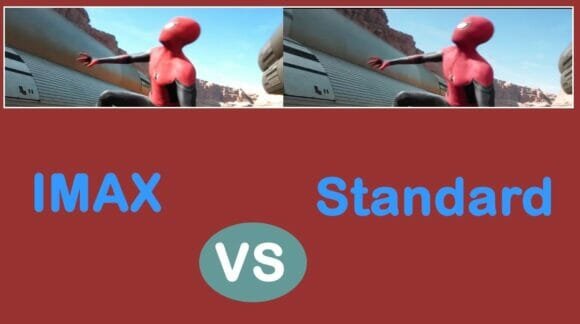
Right, everyone's talking about IMAX these days, but is it really worth the extra few quid over a standard cinema ticket? I've had a good look, and frankly, it depends on what you're watching.
Right, let's get straight to it. Everyone bangs on about "IMAX this" and "IMAX that" these days, don't they? But what does it actually mean for us, the folks who just want to kick back and enjoy a decent film? And is it worth shelling out the extra quid? I've been in and out of cinemas for years, testing kit, listening to setups – even before digital, when projectors were proper beasts. And I've seen the shift, from the old Odeon with its comfy seats to these modern multiplexes that promise the moon. IMAX is a big part of that promise. But does it deliver? **Quick Verdict: IMAX offers a grander, more immersive experience, especially for specific films, but it's not always worth the extra cash for every moviegoer or every film.**  *IMAX vs Standard, Comparison With Table — tested in the SpeakersMag workshop.* ## So, What Exactly is IMAX, Then? IMAX, or "Image Maximum," started life way back in the late 60s in Canada. Originally, it was all about these massive film reels – 70mm, ten times the size of standard 35mm. This meant a much bigger picture, more detail, and a proper immersive feel. Think science documentaries in museums, that sort of thing. They really pushed the boundaries of cinematic presentation. Fast forward to today, and it's a bit more complicated. Most IMAX theatres aren't using that chunky 70mm film anymore. They've moved with the times, largely to digital projection. This isn't necessarily a bad thing, but it does mean there are different "flavours" of IMAX out there, and that's where some of the confusion creeps in. ### The Original Beasts: IMAX 70mm Film Now, *this* is the classic IMAX experience, the real deal. You'd typically find these in dedicated science centres or purpose-built cinemas. The film itself runs horizontally, not vertically like standard film, which gives you a huge frame size – 15 perforations per frame on 70mm stock. This translates to an absolutely enormous image, packed with detail. When a film is shot with IMAX cameras, like some of Christopher Nolan's work, and then projected on one of these systems, it's breathtaking. You feel like you could step right into the screen. The sound, too, is usually top-tier, designed to fill those massive spaces. I remember seeing *Dunkirk* in one of these older IMAX setups. The sense of scale, the sound of those Spitfires roaring overhead – it was something else. You really felt like you were *there*. But these screens are rare now, and the films shot entirely in IMAX 70mm are even rarer. It's a specialist thing. ### The Modern Standard: Digital IMAX Most of the IMAX screens you'll encounter nowadays are digital. They use two powerful 2K or 4K projectors that work together to throw a super-bright, sharp image onto a huge, slightly curved screen. The aspect ratio is often 1.90:1, which is taller than your standard widescreen cinema, filling more of your vertical peripheral vision. This is where you get that "expanded aspect ratio" for some films, meaning you see more of the picture top and bottom than you would in a regular cinema. They don't always fill the whole screen from side to side though, depending on the film's original ratio. The sound system is proprietary too – a 12-channel system with specific speaker placement and tuning. It's designed to be precise, powerful, and immersive. It's not just about loudness; it's about placing sounds accurately within the space. I've had plenty of chats with cinema engineers about these setups. They're complex to calibrate properly, and a lot rides on the room acoustics. A well-maintained digital IMAX screen can be truly excellent, offering a noticeable step up from a standard screen. ### The Newer Kid on the Block: IMAX with Laser This is the latest iteration of digital IMAX, and it's a step up from the older xenon lamp digital projectors. IMAX with Laser uses, well, lasers, to produce an even brighter image with a wider colour gamut and much better contrast. We're talking deeper blacks and brighter whites, which makes a massive difference to how a film looks, especially in darker scenes. These systems also typically support the full 1.43:1 aspect ratio that the original 70mm film could achieve, meaning if a film is mastered for it, you get that truly massive, floor-to-ceiling and wall-to-wall picture. The sound system also gets an upgrade here, often to a 12-channel *with bass transducers in the seats* or more advanced versions. It's pretty impressive when it's done right. You can really feel the bass through your bones! This is the closest you'll get to the original 70mm experience in a digital format. If you've got a choice, and the film supports it, this is the one to go for. ## What About Standard Cinemas? "Standard" cinema can mean a lot of things, really. It generally refers to your bog-standard multiplex screen, which is perfectly fine for most films. They usually use digital projectors (2K or 4K, often single projector setups) and a Dolby or DTS 5.1 or 7.1 surround sound system. The screen will be a regular flat or slightly curved one, typically in a widescreen aspect ratio like 2.39:1 or 1.85:1. Don't get me wrong, many standard screens offer a perfectly enjoyable experience. Picture quality can be excellent, and modern sound systems are often very capable. The key difference is usually scale and immersion. They're not designed to envelop you in the same way an IMAX screen is. You're still watching a film; you're not quite *in* it. I've been to some smaller, independent cinemas with beautifully calibrated 4K projectors and fantastic sound. Sometimes, those more intimate rooms can actually feel more immersive than a poorly maintained, huge multiplex screen. It's not just about the tech; it's about the whole package, including how well it's set up and looked after. ## The Nitty-Gritty: IMAX vs. Standard Comparison Let's break down the main differences you'd notice. ### Screen Size and Aspect Ratio * **IMAX:** Screens are significantly larger, often curved, and designed to fill more of your peripheral vision. They can support taller aspect ratios (1.90:1 or 1.43:1) for films shot or mastered for IMAX, meaning you see more of the picture. * **Standard:** Screens are generally smaller, flatter, and typically use widescreen aspect ratios (e.g., 2.39:1), leaving black bars at the top and bottom for many films. That extra vertical screen real estate in IMAX can make a huge difference. Imagine a shot of a skyscraper – in IMAX, you see more of it, feeling its height. In standard, it might be cropped slightly. ### Picture Quality * **IMAX:** Generally brighter, sharper, and with better contrast, especially with IMAX with Laser. Dual projectors ensure even illumination and often higher resolution (4K or equivalent). Wider colour gamut with Laser systems. * **Standard:** Varies wildly. Can be excellent with a good 4K projector, but often less bright, lower contrast, and sometimes less sharp than a well-maintained IMAX. Colour fidelity can be good but might not match Laser IMAX. ### Sound Experience * **IMAX:** Proprietary 12-channel (or more) sound system, precisely calibrated for the room. Designed for powerful, accurate sound placement and deep bass. Often has speakers mounted in the ceiling and sometimes tactile transducers in seats. * **Standard:** Typically 5.1 or 7.1 channel Dolby Digital or DTS. Can be very good, but generally less immersive and lacks the specific calibration and bass extension of IMAX. Speaker count and placement are less elaborate. I've always said that sound is half the picture. And in an IMAX cinema, they really commit to that. The way the sound moves around you in an IMAX room is genuinely impressive, especially for action sequences or atmospheric moments. ### Seating and Comfort * **IMAX:** Seats are often tiered steeply to ensure everyone has a good view of the massive screen. Can be more comfortable in some newer venues. * **Standard:** Seating can vary from flat to moderately tiered. Comfort levels are a mixed bag across different cinemas. Be warned, though, that if you sit too close in an IMAX, it can be a bit much, almost overwhelming. Find that sweet spot, usually a bit further back than you might normally choose. ### Ticket Price * **IMAX:** Always more expensive. Expect to pay a few quid extra, sometimes significantly more, especially for IMAX with Laser or 3D presentations. * **Standard:** Cheaper, obviously. You get what you pay for, to a degree. This is usually the decider for most folks, isn't it? Is the extra experience worth the extra tenner? Sometimes, yes. Other times, not so much. Here's a rough comparison table: | Feature | Standard Cinema (Typical) | IMAX (Digital) | IMAX with Laser (Premium) | IMAX 70mm Film (Rare) | | :------------------ | :-------------------------------- | :------------------------------------ | :-------------------------------------------- | :----------------------------------------- | | **Projection** | Single 2K/4K Digital | Dual 2K/4K Digital Projectors | Dual 4K Laser Projectors | Single 70mm Film Projector | | **Brightness** | Good | Very Good | Excellent (High Nits) | Excellent (Bright, Natural) | | **Contrast** | Good | Good | Outstanding (Deep Blacks) | Outstanding | | **Colour Gamut** | Rec. 709 | Rec. 709 | DCI-P3 (Wider) | Wide, Natural | | **Aspect Ratio** | 2.39:1 or 1.85:1 | 1.90:1 (for IMAX content), 2.39:1 others | 1.43:1 (for IMAX content), 1.90:1 others | 1.43:1 | | **Screen Type** | Flat or slightly curved, smaller | Large, curved, taller | Very large, curved, much taller | Massive, curved, dome/flat | | **Sound System** | 5.1 or 7.1 Dolby/DTS | Proprietary 12-channel | Enhanced 12-channel (with seat transducers) | Discrete 6-channel (but massive headroom) | | **Immersion** | Good | Very Good | Excellent | Unparalleled (when native content) | | **Ticket Price** | Standard | Higher | Significantly Higher | Highest | | **Availability** | Widespread | Common | Growing (Premium Venues) | Very Rare | ## When is IMAX Worth It? My Two Cents. Honestly, it depends on a few things. Not every film benefits equally from the IMAX treatment, and not every IMAX cinema is created equal. There